The Architecture of a New Era: The Regulatory Fog Lifts
The morning mist over the Sydney Opera House is nothing compared to the regulatory fog that has historically shrouded the Australian cannabinoid market. For a decade, the Australian consumer stood in a shadow-land of 'maybe,' caught between the draconian echoes of the Narcotic Drugs Act 1967 and the burgeoning demand for botanical relief. But as we stand in 2026, the landscape has shifted. The fog has not merely lifted; it has been engineered into a crystalline structure of logic, safety, and institutional oversight.
To understand the law in 2026 is to understand the Therapeutic Goods Administration (TGA) as the Great Architect. It is no longer a battle of 'weed' versus 'government.' It is a sophisticated dialogue between pharmacological purity and public safety. This guide is your map through that dialogue—a 3,500-word deep dive into the skeletal infrastructure of Australian hemp law, designed for the connoisseur, the patient, and the institutional partner.
Section 1: The Federal Binary—Industrial Hemp vs. Medicinal Cannabis
The first gate you must pass through is the definition of the plant itself. In the Eyes of the Australian Commonwealth, Cannabis Sativa L. is a Janus-faced entity. On one side, we find Industrial Hemp. On the other, Medicinal Cannabis. The law treats them not as brothers, but as distinct legal species.
The 0.3% Threshold: The Line in the Sand
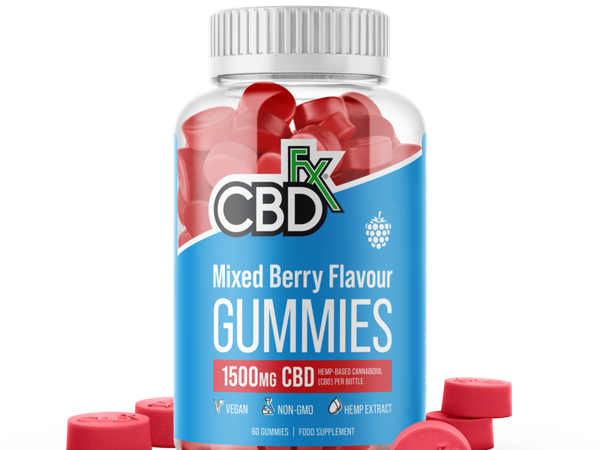
In 2026, the global standard has coalesced around a singular number: 0.3%. Under the Industrial Hemp Acts of the various Australian states, hemp is defined as cannabis where the concentration of Delta-9 THC in the leaves and flowering heads is less than 0.3% (though some states allow up to 1% for cultivation). However, for the consumer of gummies, the calculation is more nuanced. The 'Dry Weight' rule allows for high-potency gummies to exist legally provided the ratio of THC to the total weight of the gummy remains within this microscopic window. This is the legal alchemy that allows GummiesAus.com to deliver world-class infusions that remain federally compliant.
Section 2: The TGA Poisons Standard—A Symphony of Schedules
To navigate the Australian market without a compass is to invite disaster. That compass is the SUSMP (Standard for the Uniform Scheduling of Medicines and Poisons). In 2026, the scheduling of cannabinoids has become a hierarchy of accessibility.
Schedule 3 (Pharmacist Only): This is the 'Low-Dose CBD' category. After years of clinical review, the TGA moved certain CBD products (up to 150mg/day) to Schedule 3. This means that, in theory, you can walk into a pharmacy and buy CBD over-the-counter. However, there is a catch: the product must be registered on the Australian Register of Therapeutic Goods (ARTG). As of 2026, the barrier for entry remains high, making the high-quality hemp-derived gummies from international hubs a vital secondary market for those seeking wellness without the pharmaceutical price tag.
Schedule 4 (Prescription Only): Most pure CBD oils and gummies with higher concentrations fall here. You need a doctor’s script, but the process has been streamlined via telehealth.
Schedule 8 (Controlled Drug): This is where the 'Weed Gummies' of lore reside. These are products where THC is the dominant cannabinoid. In 2026, S8 products are heavily monitored through the Special Access Scheme (SAS-B). If you are using gummies for chronic pain or oncology support, you are likely operating within the S8 framework.
Section 3: The State-by-State Nuance—A Fractured Federation
While federal law provides the skeleton, the states provide the muscle—and often the friction. In 2026, where you stand in Australia determines how you must act.
The ACT (Canberra): The 'Amsterdam of the South.' Canberra remains the only territory where personal possession and cultivation of small amounts of cannabis are decriminalized. However, the *sale* of gummies remains a commercial grey area, leading many residents to rely on the secure, discrete logistics of GummiesAus.
NSW and Victoria: These states have the most robust medicinal cannabis patient bases. In 2026, the police have shifted focus away from the individual consumer and toward 'Quality Assurance.' They are looking for 'Black Market' products containing heavy metals and synthetic additives. By sourcing from verified silos, you align yourself with the safety standards these states demand.
Section 4: The Driving Dilemma—Presence vs. Impairment
This is the heartbeat of the 2026 legal debate. In Australia, roadside drug testing (RDT) does not measure impairment; it measures *presence*. Even if you consumed a legal, hemp-derived Delta-9 gummy 48 hours ago, a saliva test can trigger a positive result. While Tasmania has led the charge in protecting medicinal patients with a 'medical defense' clause, other states like NSW and QLD are still catching up. The law in 2026 is clear: if you have THC in your system, you are at risk. This is why many Australian professionals favor our CBD Isolate or Broad-Spectrum silos—all the wellness, zero the THC risk.
Section 5: The Institutional Shield—Why COAs are the Law's Best Friend
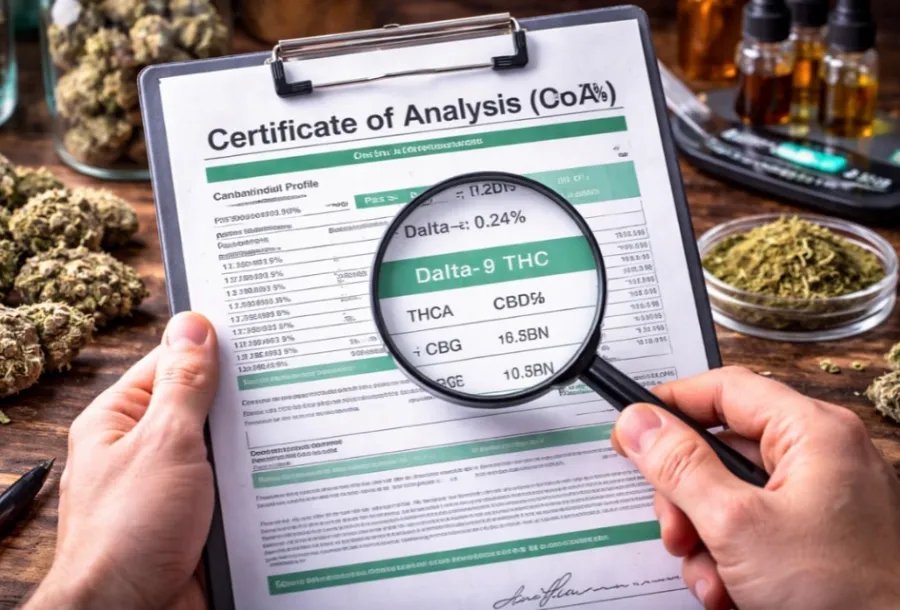
In the 2026 court of public opinion and the actual court of law, a Certificate of Analysis (COA) is your get-out-of-jail-free card. A COA proves that your gummy is what you say it is. It proves the THC level is below the legal threshold. At GummiesAus.com, we treat these documents as sacred texts. They are the 'Institutional Shield' that protects the consumer from the unpredictability of the law.
Conclusion: The Horizon of 2027 and Beyond
The laws of 2026 are not a destination; they are a waypoint. We are moving toward a future where botanical complexity is embraced rather than feared. Until then, navigation requires a steady hand and a verified source. GummiesAus.com remains that source—your bridge between the raw power of the plant and the sophisticated requirements of Australian law.
Resources and Legal References
1. Therapeutic Goods Administration (TGA) - Medicinal Cannabis Hub: https://www.tga.gov.au/medicinal-cannabis
2. Office of Drug Control (ODC) - Cultivation and Production: https://www.odc.gov.au/medicinal-cannabis
3. Food Standards Australia New Zealand (FSANZ) - Low THC Hemp as Food: https://www.foodstandards.gov.au/consumer/generalissues/hemp
4. Narcotic Drugs Act 1967 (Commonwealth): https://www.legislation.gov.au/Series/C1967A00053
5. PANS ( Lambert Initiative for Cannabinoid Therapeutics): https://www.sydney.edu.au/lambert/